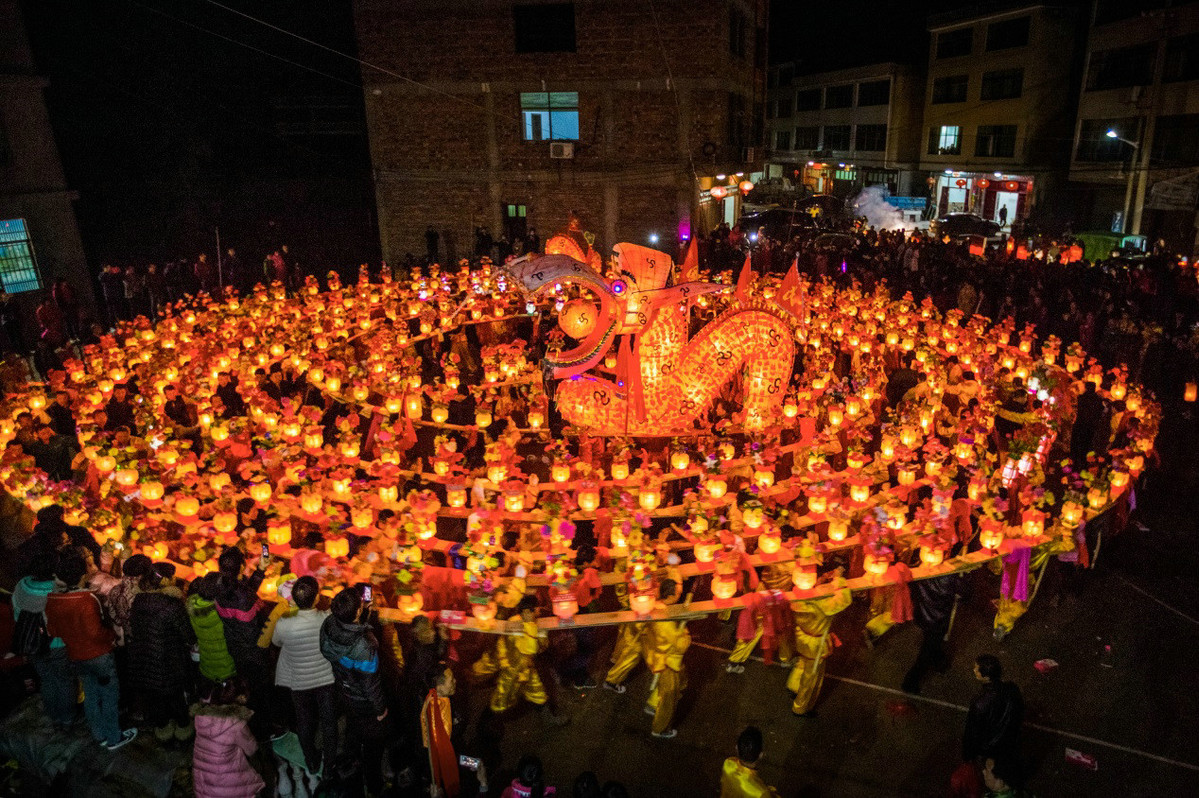
Bench Dragon Dance
Introduction
The Bench Dragon Dance is an enthralling traditional performance that forms part of China's rich cultural heritage. This captivating display involves a series of performers holding a dragon made from interconnected benches, which they dance along to the rhythm of traditional music. Each participant in the Bench Dragon Dance carries a bench that is skillfully decorated to depict various cultural and historical motifs, such as mythical creatures, plants, and elements from ancient Chinese legends.
The origin of the Bench Dragon Dance can be traced back to the Qing Dynasty (1644-1911), where it was brought to the mountainous regions through traveling traders. This traditional performance is renowned for its ability to blend multiple art forms, including calligraphy, painting, paper-cutting, bamboo weaving, and root carving, with elements of sports, acrobatics, and dance.
It is celebrated primarily during festive occasions, such as the Lantern Festival and the Chinese New Year, where it serves as a vibrant expression of cultural identity and heritage for the communities involved. The Bench Dragon Dance not only offers a visually stunning spectacle but also embodies the spirit of unity, courage, and optimism, fostering a deep emotional and cultural connection among participants and spectators alike.
Performances of the Bench Dragon Dance are typically community-centered events, with local residents and sometimes tourists gathering to partake in the festivities. These events feature a lively atmosphere filled with the sounds of gongs, drums, and other traditional Chinese musical instruments, enhancing the celebratory mood.
The dance itself involves intricate choreography, where the performers mimic the movements of a dragon, often chasing after a symbolic "pearl", held by a performer at the front. This dynamic and elaborate performance requires significant skill and coordination, as the dragon's head leads the troupe, guiding the direction and rhythm of the entire dance.
Moreover, the Bench Dragon Dance has gained recognition as a form of national intangible cultural heritage, highlighting its cultural significance and the importance of preserving this traditional art form for future generations. Efforts to sustain and promote this heritage have seen the dance performed in various regions, including international events, demonstrating its appeal and relevance in contemporary culture.
In recent years, the Bench Dragon Dance has evolved with the incorporation of modern elements while retaining its traditional essence. This adaptability ensures that the dance remains a living tradition, capable of captivating new audiences and sustaining its cultural relevance. It serves not only as an artistic performance but also as a medium for cultural exchange, fostering a broader appreciation for the depth and diversity of Chinese cultural heritage.
The Bench Dragon Dance stands as a testament to the enduring vitality of traditional Chinese folk arts, reflecting the rich tapestry of history, creativity, and communal spirit that characterizes the cultural landscape of China.








